High Fashion at A Young Age By: Bea Pelayo

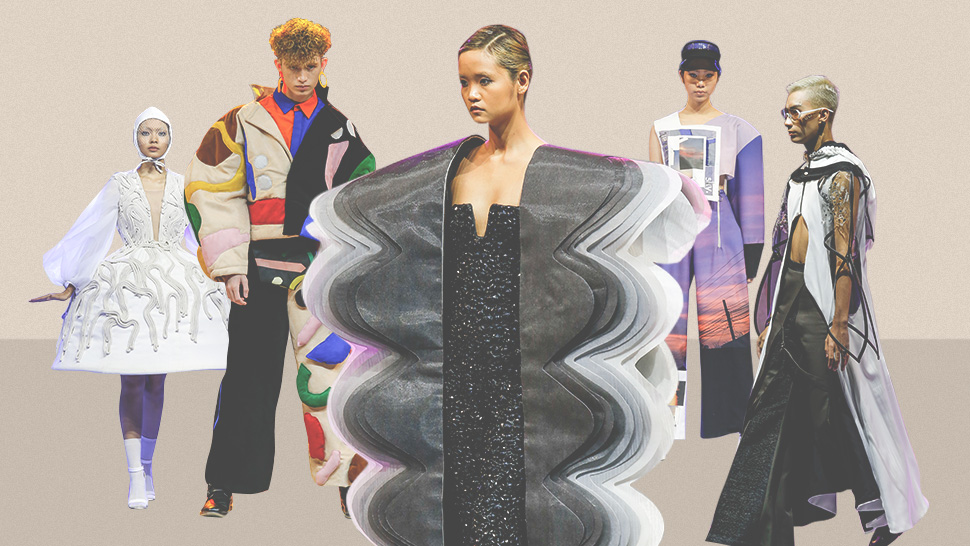
When you are twenty, the biggest fashion conundrums you have are if your outfit matches the event that you are going to, if it is comfortable, or even if it reveals too much about yourself. However, there is a group of impressionable young ladies and men who are serving up high fashion with a nod to Filipino tradition. Fashion design graduates from De La Salle-College of Saint Benilde have showcased their works in their annual graduation show Sinulid. However, a large number of works in that show highlighted the traditional Filipino Look and twisted it in some way. They have been mixing Filipino Culture and Tradition and reinventing it into their designs. They are integrating the style, material, and concept that they are using and revolutionizing the “Filipino Look.” 

The “Filipino Look” is a typical Terno or Filipiniana wherein it looks very Spanish and very formal. But today’s aspiring designers have both fresh and unconventional ways of looking that this “Filipino Look.” In terms of high fashion, the “Filipino Look” has been reinvented in the wildest of ways. Some looks deconstruct what traditional look is and use the most unusual materials. Aspiring Filipino Designers have taken this notion of what the traditional “Filipino Look” is on a whole other level. Certain designers have shown Ternos in the most unconventional ways. They used woven abaca for the sleeves and used colors that remind you of farmers. One designer, Lya Licaros, used a romantic type of aesthetic to portray the traditional Filipino woman: Maria Clara but still combined that modern look by combining it with a bodysuit. They make the simple look of traditional clothing so elevated and different that you really see the diversity of the traditional Filipino clothing. These young aspiring designers have been revolutionizing the fashion industry in the Philippines and putting culture in the center.

Looking into the motivation of these aspiring creators on why they chose to show a cultural angle in their final pieces they wanted to show a different side of our culture. They were inspired by the rich culture that we have in this country from the materials that we use to the stories and heroes that we have. It is clear to them that the Philippines is a rich source of fashion inspiration that cannot be underestimated. 

There is more to fashion than just pretty clothes—these fresh blood are proving that fashion encompasses all walks of life, that there are many untapped sectors of fashion, and that there is more than one way of creating clothes.

The Modern Day Filipin(ian)a By: Erica Valerio

We all know the traditional Filipiniana, but we also know that it’s being modernized in ways that we did not imagine. And there are a lot of homegrown Filipino designers who do their own version of the traditional Filipino costume; making it very unique, creative- and most of all, modernized. The modernization of Filipino fashion has caught the interest of possibly every modern Filipina, hence, giving rebirth to the traditional Filipiniana. It’s being modernized by people from small businesses to major celebrity designers all over the country. We see it as it’s being widely shared on the Internet, making it truly accessible to this generation.  

Filipino designers modernize the Filipiniana in such a way that they add their own flare to it and make it wearable in a daily basis. From a traditional ceremonial outfit into a staple wear of the everyday Filipina, the integration paved way to countless innovative designs that sustain the traditional Filipino elements while putting out more stylish designs in the process. There are many fashion brands out there who are able to promote sustainability in clothing and give significance to the local fabrics and designs. Famous social media platforms like Instagram and Facebook definitely helped in spiking up the engagement with the modern FIlipina due to all the brands that you can easily find with just a tap away. Even the major e-commerce shopping merchant, that is known to be Beauty MNL, really does its job in helping supporting local and buying local by promoting it all over their website. They even have their own section in their website where they show all the local brands that you can choose to buy from— truly making it accessible to every Filipina they want to cater to in the market. Social media influencers also do their job in supporting and buying local by simply sharing, purchasing, and doing paid partnerships with local brands in order to help boost their credibility in the market. As a consumer, it would make me want to buy the items that they are promoting since I am an avid fan of them and I would like to buy what they buy too. 
You will see various unique ways of how the traditional Filipiniana is being made, and we can clearly see that it’s not only being embraced by online brands, but also the biggest Filipino media and entertainment group that is ABS-CBN. They recently had their Star Magic Ball where the theme was the modern Filipiniana. Celebrities wore masterpieces that are incredibly unique yet still incorporated the elements of what the traditional Filipiniana is. They still remain distinct in its culture, they just added a bit flare to it. This event reached to a lot of Filipinos, thus an increase in awareness was made in hopes that every Filipina and Filipino will be inspired and have a sense of call to action to embrace wearing the national costume loud and proud.

On Trend By: Alia Cabatuando

As Filipinos, we have lost our sense of cultural appreciation, we tend to patronize western products and other international products. Why? Because we follow what is trending, we follow what is “hype”, and we have patterned our sense of identity to numerous cultures that isn’t ours. Filipinos tend to lean on what everyone is doing and when it comes to fashion, there’s not much difference. We prefer to purchase our clothes in shops like Zara, H&M, Adidas, Nike, and many more western brands because this is what we are accustomed to. We tend to neglect and forget what is truly ours. Fortunately, with the help of social media, slowly but surely, the Filipino youth are starting to see the value and appreciate local products. Recently, local products are becoming a trend, millenials and the gen-z started a trend called “#SupportLocal” wherein various local businesses are getting exposure for their art and products. The integration of traditional Filipino culture to modern fashion started a long time ago, however, it only started trending recently. Local business owners saw that there is a gap that needs to be filled, even though the fashion industry is a tough market, they saw that there was something missing and that is our very own fashion style. Shoes, bags, accessories, and clothes are now being made using materials that can be found in our traditional culture, such as bamboo leaves, abaca fibers, and piña. Furthermore, tribal patterns from different parts of the Philippines are now being made into shirts, jackets, and jeans. We are slowly showcasing our culture by integrating something that is uniquely Filipino. And since we are talking about modern fashion, it is obvious that even though our local products incorporate traditional Filipino culture, the designs that are being put out in the market are designs that can still be appreciated by different nationalities and can also compete internationally. Also, the efforts of these local business owners are not going unnoticed due to the fact that a lot of Filipino youth are starting to support and buy local products. These consumers are starting to get more engaged in the culture that is embedded in our local products, it gives them pride to wear something that is uniquely Filipino and is designed and made by their fellow Filipinos. A problem that they face however, is the accessibility of our local products, in buying clothes, consumers still prefer going inside the store, trying on the clothes to see whether it fits them nicely and scanning through the store for more options. And this is something that our local fashion lacks, most of the business owners can only be found online or through weekend bazaars, this gives them little exposure and marketing. Nevertheless, the local fashion industry is slowly getting the proper exposure that it deserves. At the end of the day, we would always want something that is truly ours, something that we can be proud of and something that we can show off the world. And this is it, there is an abundance of startups that are trying to penetrate the market and it is our duty as consumers, to support local products and finally patronize something unique and original.

The True Filipino Look

We are Team Charlie. A group of Filipinas who truly believe in the potential of local Filipino clothing. It was that one day where we realized that the local fashion industry is a slowly rising icon but we Filipinos are too busy watching the international fashion scene to be able to see what local has to offer. This rise is relevant for each Filipino because it has something to do with their identity that is rooted from our deep, rich and vibrant culture. This matter is truly close to our hearts so we decided to become advocates of change that would gradually change, even just the slightest bit the perception and opinion of our fellow Filipino citizens about locally made fashion pieces.

Our fashion sense as people is deeply rooted in history. We are a nation that has been colonized numerous times and because of this, a lot of cultural ideas have already mixed with ours so as a result, our fashion identity is a blur. Although there is no clear definition of what Filipino fashion is yet, we would like people to realize that supporting local is the stepping stone to be able to form that universal understanding of the distinct Filipino fashion image. If we are able to accomplish this, we will be united as a people and our identity will finally emerge, ultimately finding our distinction among all the other cultures we so admire. To achieve this seemingly big goal, we think that we should begin slowly with ourselves and steadily elevate it to groups of friends then the community and soon, the whole nation. We have to believe in the local products that we have, not just spreading the word about how great and beautiful they are but transcending one’s action to actually buying it, using it and making it part of our daily lives. We want to be able to show our fellow Filipinos that if we could do that with fashion pieces of other cultures, we can be able to do it to our homemade products as well. We envision a future wherein local fashion businesses are flourishing and becoming renowned just like big western brands because we know that our rich culture is capable of winning the hearts of any person and they will embrace our culture just like how we did with theirs. We are aware that what we want seems ambitious, but our faith in the Filipino potential and talents do not waver. We know that the time will come when we can have a shared understanding of what Filipino fashion would look like but for the time being, we know that the start of this journey would truly begin when we start buying our own and realizing that support towards local fashion is not enough to get the cause to the level we want to achieve. We are far from succeeding right now but maybe through presenting the stark truth and genuinely asking for help, together we can succeed as a one united Filipino people.

Typically, when you think of Traditional Filipino fashion, one of the first things that come to mind is the State of the Nation Address or any formal event. The SONA is where you see everyone in a Terno or a Barong Tagalog. You see all these political figures with their families wearing similar silhouettes, but the only difference with their outfits is their color of choice. In modern times, special events and Buwan ng Wika are the occasions you see traditional Filipino fashion in full force. You tend to connect Filipino Fashion with a childhood memory wherein you are scarred from your childhood wearing an itchy terno while singing Kaleidoscope World by Francis M. There is this notion that you can’t wear a terno every day or you should only use woven bags in the beach. But, throughout the years, aspiring Filipino designers have been changing the game of Modern Filipino Fashion both in the realms of casual wear and high fashion. They have been mixing Filipino Culture and Tradition and reinventing it into their designs. They are integrating the style, material, and concept that they are using and revolutionizing the “Filipino Look.”  These designers are not only working for the benefit of Filipino Fashion — they are also working for the benefit of their fellow Filipinos. Designers have been pushing the envelope to highlight the different cultures we have in the country. 

We know that what we are asking for is big. It is not as simple as pressing a share button to hype awareness. Awareness isn’t the problem when it comes to supporting local designers and finding a look that encapsulates the Philippines. The matter here is how loyal Filipinos are to their culture. That is what we are trying to achieve, by showing the experiences and moments of inspiration from the consumer to the designer and seeing how far Filipino fashion can go in the future to get our fellow Filipinos to get excited about the future of fashion here in the country. This team wants Filipinos to embrace what is truly theirs. 

Confessions of a Modern Filipina Shopaholic By Aira Valencia

I have always been a fan of the fashion industry. I love watching fashion shows, I shop clothes almost everyday, I follow influencers with a great sense of style, and I love “mixing and matching” my clothes as well. I’m the type of gal who wouldn’t go out of the house without feeling confident with what I’m wearing. I always want to look my best as much as possible in every occasion. But on the other hand, I am also guilty of shopping in Forever 21 rather than Kultura when I go the mall and having tons of clothes made in western countries but clothes that are made in the Philippines I could count with just one hand. Yes, I was guilty of patronizing western products more than our own. I used to be one of those people who just say “#SupportLocal” but not buy local. But throughout the years, as I grew up traveling a lot of times around the country, I also grew up appreciating our culture more. The more I see the beauty of the Philippines, the more I get to embrace what is truly ours. More than that, I am also surrounded with a diverse environment who values the Filipino culture more than other cultures. Since we patterned our sense of identity with cultures that colonized us before, we have lost our own. With their influence, I also got to see the Philippine culture in another perspective. They shed light to what most of us don’t see and appreciate. We always stick with what is “trending” instead of enriching what is ours. We are more proud of wearing branded clothes made by our neighboring countries rather than being proud to wear locally made fashion pieces up until today. But with the help of social media, we are given more opportunities to appreciate how the Filipino fashion industry is integrating the Filipino culture to modern fashion. Although this started long before, it just began to rise to fame recently. And it fills my heart to see a lot of the young generation to take pride of our culture and cultivate it to what is in today. There are a lot of start-up businesses now who incorporate the baro’t saya, barong, and tribal patterns to casual or formal wear. Other than that, there are also those who focused on other types of fashion pieces such as bags. One of them are siblings Kiana Aniban and Keano Aniban who owns Saya Ph with the help of their mom. They make locally made affordable bags that they cater to the interest of the youth. Their bags are made of different leaves such as “lauhala” and “tikog” that they mix and match with different beads and woods and get them handwoven in Negros. They firmly believe that their product could instill the value of Filipino fashion to the youth. After witnessing several more Filipino fashion pieces throughout the years, I can say that there are a lot of brilliant and creative Filipino fashion enthusiasts that we should be proud of. One is Jose “Dora” Dorado, a clothing technology graduate of UP, Diliman. We asked him, in his own opinion, how does he think we could integrate filipino fashion into modern fashion today, he said: “It is already integrated if you know where to look.” We just have to have a perceptive outlook and not be blinded with western products. If a person like me who used to buy nothing but westernized clothing pieces and only had an eye for western fashion suddenly buys locally made fashion pieces now, then you could also change your fashion sense and embrace what is truly ours. Embrace what is truly Filipino.

Lost Identity By: Tini Abayan

It’s amazing to be able to distinguish various fashion styles of each country because then it shows their uniqueness and how they have branded or even associated themselves with a certain style. However, for the longest time, I have been wondering about how Filipinos set themselves apart from all the trendy styles seen nowadays.

Quite frankly, there is no clear definition of what Filipino fashion is. I think we like riding the bandwagon and trying out the newest fashion statements of all the western countries because we think that what they promote is much better than what our local scene advocates. It is truly a devastating phenomenon to see that our own people do not support and even buy Filipino fashion pieces. It goes to show that we are more invested in trying out what other cultures have because it has an image of being more superior or sophisticated than our local styles. This reasoning completely degrades our Filipino identity because it implies that we are of lower tier than all the other cultures and it is a painful truth to realize that we disregard a part of who we are as a person. However, can we blame all the Filipinos avidly supporting fashion rooted in other cultures? A part of me says no, because through time we lost our identity as Filipinos and it all goes back to the times of colonization when we were imposed who we should be and what we should do. We tried becoming like our conquerors because they degraded our race and constantly told us that we were nothing compared to them. The peak of our identity crisis started right there and then. After, comes another set of people take over, and another and another. It was a vicious cycle that led us to think that we had to change who we are just because other people said we should, the virtue of obedience instilled in us Filipinos was indeed a disadvantage during that time. All of this is relevant now because it has become our trait to prioritize buying anything besides local fashion. Our colonial mentality has taken a toll upon all of us which explains our behavior towards various Filipino products. With this, we could say that we have no distinct Filipino image or style that is associated with our culture. We are a mix of different culture styles mashed in one if I may so say and it hurts to see that it has become like this because of our very own citizens. To me, it seems like we are Filipino wannabes who are trying to be something we aren’t. Those people are lost and are looking for something that they could identify as and I hope that with the emergence of the integration of Filipino culture in modern fashion, people can now be able to go back to their roots and form an image or better, a branding of what a Filipino is which will reflect in our fashion as a people.

It would be amazing to distinguish ourselves amongst other cultures with the style we express. To greatly set us apart from all the other cultures around the world would probably be one of our biggest achievements of progress. We cannot stay as wannabes. Our rich culture should be able to reflect on our identity as Filipinos and I firmly believe that one day, we will realize it and we will have a unique fashion branding that would make the whole world turn to us and imitate what we have too. 

Design a site like this with WordPress.com
Get started